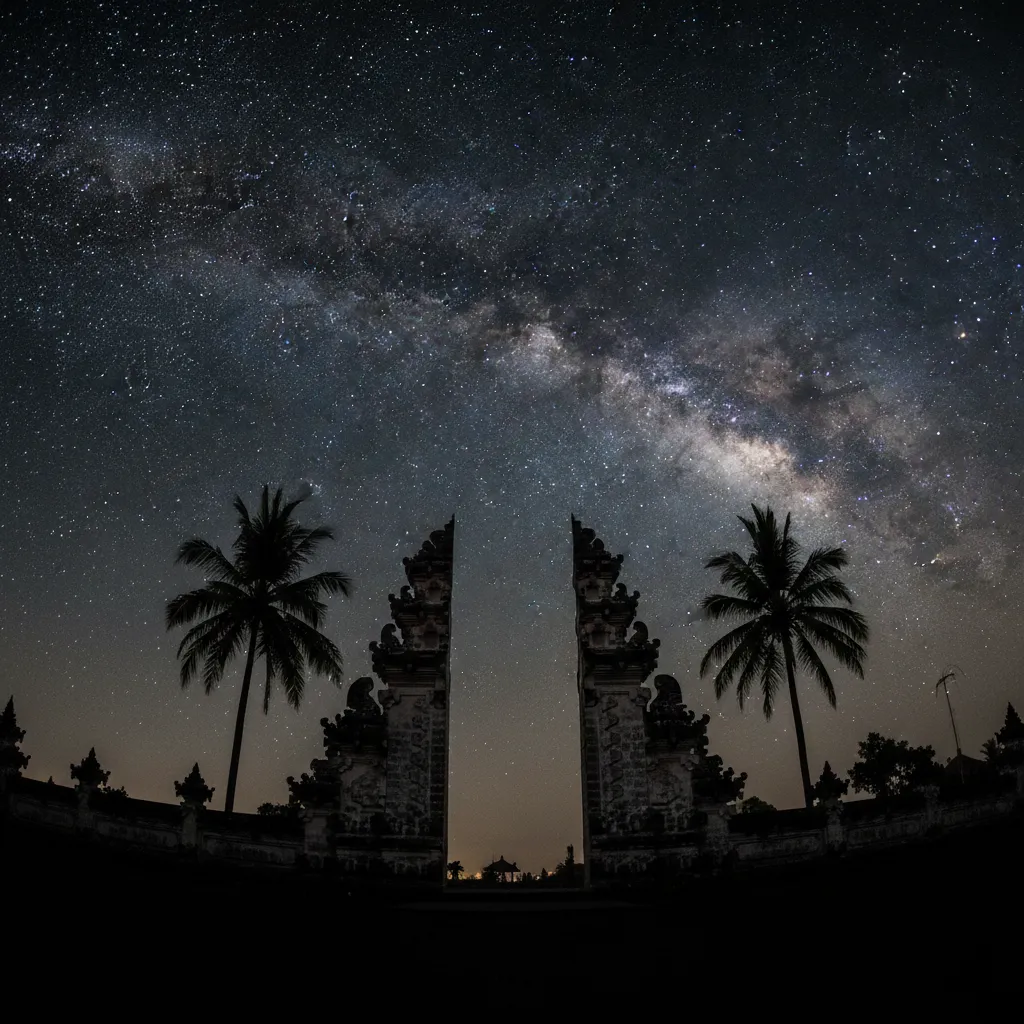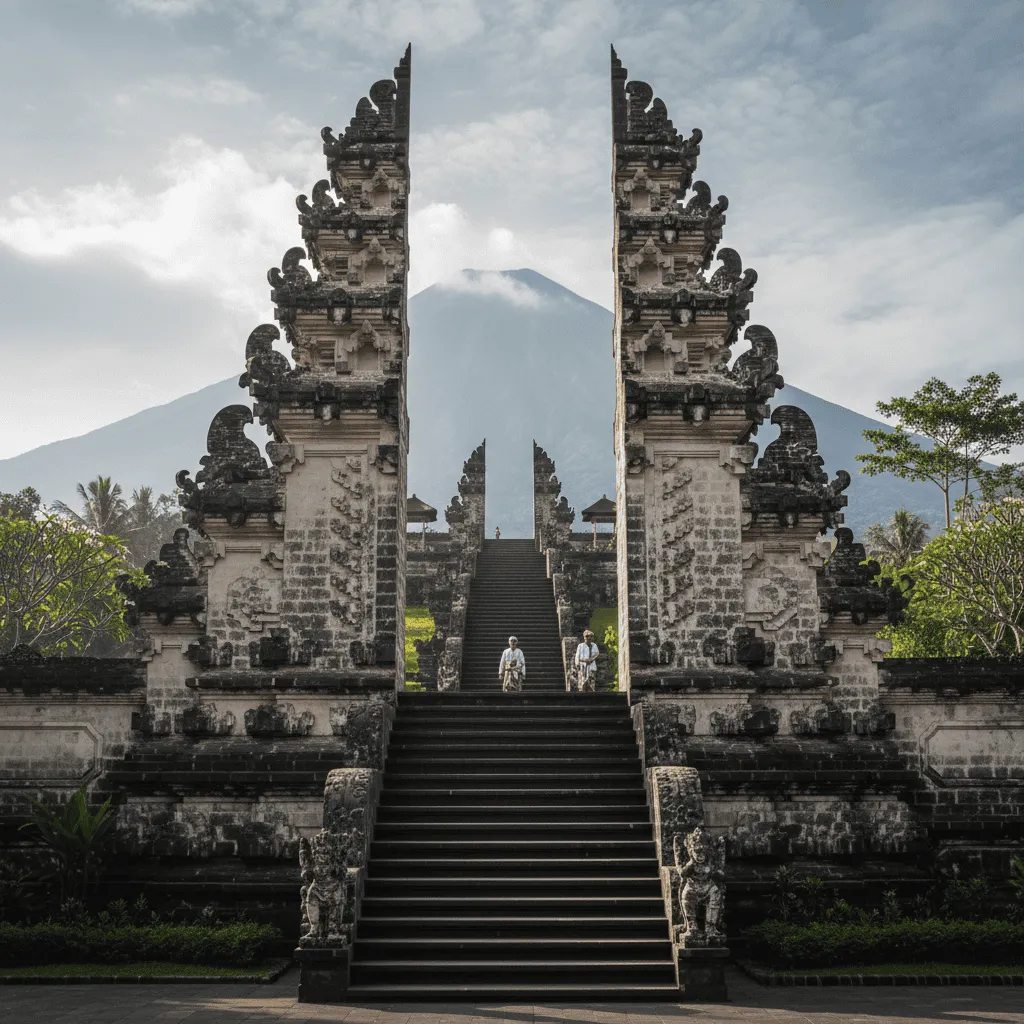
When discussing the spiritual heart of the Island of the Gods, all roads lead to Pura Besakih Mother Temple. Located in the village of Besakih, Rendang, Karangasem, this is not just a tourist attraction; it is the holiest, largest, and most important temple complex for Balinese Hindus. Known locally as Pura Agung Besakih, this sanctuary sits majestically on the southwestern slopes of Mount Agung, the highest volcano in Bali.
For travelers seeking a profound cultural experience, visiting Besakih is mandatory. At an altitude of nearly 1,000 meters, the air is crisp, and the panoramic views are breathtaking. However, the true magic lies in its history and grand architecture that has stood the test of time, surviving even the devastating 1963 volcanic eruptionâa miracle that locals believe demonstrated the gods' power.
The Majestic Architecture on the Slopes of Mount Agung
The architectural grandeur of Pura Besakih Mother Temple is unmatched. The complex is built on six ascending terraces, designed to lead the spiritual pilgrim upward, closer to the sacred peak of Mount Agung which is believed to be the abode of the gods.
The centerpiece of this massive complex is Pura Penataran Agung, the main temple dedicated to Shiva (The Destroyer). Here, you will see the iconic towering Meru (multi-tiered shrines) with roofs made of black sugar palm fiber (ijuk). These towers, ranging from one to eleven tiers, symbolize the hierarchy of the deities. The entrance is marked by a split gate (Candi Bentar) which represents the separation between the mundane world and the spiritual realm. Walking through this gate with the misty volcano backdrop is a moment that defines the Mount Agung temple experience.
A Complex of Dozens of Temples
Many visitors mistakenly think Besakih is a single building. In reality, it is a sprawling complex consisting of at least 86 individual temples, including the main Pura Penataran Agung and 18 companion temples (Pura Pendamping).
Each clan and caste in Bali has its own dedicated temple within this complex. This means that every Balinese Hindu has a connection to Pura Besakih Mother Temple. As you explore the area, you will notice smaller temples like Pura Gelap (Temple of Thunder) to the east and Pura Kiduling Kreteg to the south. This intricate layout reflects the Balinese concept of Tri Hita Karanaâthe harmony between God, humans, and nature.
Guide to Using Local Guides
Navigating the largest temple in Bali can be overwhelming due to its sheer size and strict religious rules. Therefore, using a local guide is highly recommended and often mandatory for tourists.
Official Guides: Upon purchasing your Besakih Temple entrance fee (approx. IDR 150,000 for foreigners), a local guide and a sarong rental are usually included.
What They Do: These local guides are custodians of the temple. They will ensure you follow the dress code (sarong and sash are compulsory), keep you out of restricted prayer-only zones, and explain the deep history of the site.
Tipping: While the service is included, tipping your guide (around IDR 50,000 - 100,000) is a gesture of appreciation for their knowledge and hospitality.
The Highlight: Witnessing the Grand Piodalan Ceremony
While the architecture is stunning year-round, the soul of Pura Besakih Mother Temple truly comes alive during a major ceremony. The most spectacular event is the Bhatara Turun Kabeh (usually around March or April), a grand ceremony where the gods are believed to descend to the temple.
During this Piodalan ceremony Bali, the complex transforms into a sea of white. Thousands of Balinese Hindus, dressed in pristine traditional white attire, flock to the temple carrying towering fruit offerings (Gebogan) on their heads. The sound of prayer bells (Genta), the smell of incense, and the majestic sight of devotees climbing the grand staircase create a spiritual atmosphere that is impossible to describe with words. If you can plan your trip during this time, you will witness one of the most magnificent cultural spectacles on earth.
Tags
WonderBali
Writer and Bali lover sharing stories about the beauty of the Island of Gods.